Call or Text: (503) 360-0025
REQUEST PROPOSAL →

The Real Cost of Condo Living: The Hidden Risks of Rock-Bottom Dues
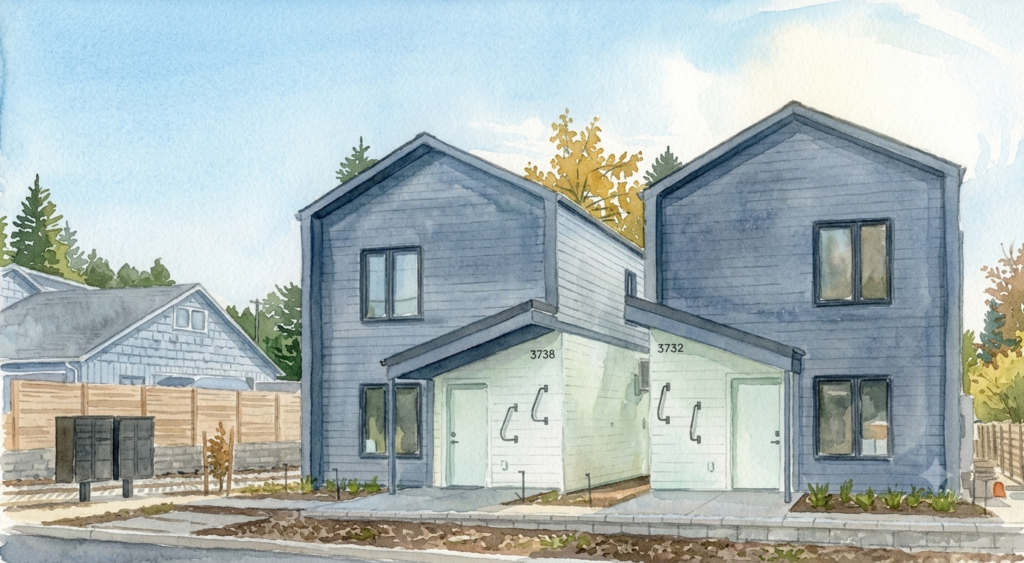
When you buy a townhome-style condominium or a cottage cluster home—where there are no shared hallways, and you, the homeowner, are entirely responsible for your own exterior envelope, including your roof, siding, and windows—it’s easy to assume your monthly dues should be virtually non-existent. If the association isn’t saving up to paint your siding or fix your roof, why pay more than a nominal $100 a month?
The truth is, even when owners maintain their individual physical structures, a condominium association is a shared legal and operational entity. Running it legally, safely, and cleanly requires a realistic budget.
In Portland, the average HOA payment is nearly $490, according to regional brokerage eXp Realty — and residents across community associations statewide pay over $1 billion a year combined to maintain their neighborhoods. Even for bare-bones, “self-contained” communities where owners handle their own exteriors, a realistic floor for baseline operations typically sits between $150 and $250 per month, based on our experience managing these communities. Setting dues at an artificially low rate like $100 leaves the association running on financial fumes, creating massive liability.
In our experience managing self-contained communities where owners handle their own exteriors, realistic operating costs still tend to run $150 to $250 per month — even with zero building maintenance on the COA’s plate. Here is where the money must actually go:
The Bare-Minimum Operating Baseline
Even with zero building maintenance on the HOA’s plate, fixed common costs quickly add up:
- Shared Utilities: Common master-metered water, sewer, and trash services. Common Grounds: Landscaping for shared pathways, driveways, or perimeter areas.
- Insurance : Master policy coverage, claims coordination, and annual reviews to keep the association properly protected.
- Professional Administration: Management fees covering billing, financial oversight, an online owner database, and proper record-keeping and credentialing.
- Staying Compliant & Protected: Mandatory annual tax filings, state registry renewals, and legal fees to keep the association active and protected.
The Reserve Fund Trap
Even if the HOA doesn’t cover your roof, it still owns shared infrastructure. Things like shared driveways, parking asphalt, retaining walls, or main water lines are common elements. By Oregon law, the HOA must fund a reserve account to prepare for the eventual repair or replacement of these shared elements.
The Bottom Line
Setting realistic dues isn’t an extra expense—it’s the basic price of protecting your investment and ensuring you aren’t hit with an unexpected, massive special assessment later.